بِسْمِ ٱللَّٰهِ ٱلرَّحْمَٰنِ ٱلرَّحِيمِ
اللَّهُمَّ صَلِّ عَلَى سَيِّدِنَا مُحَمَّدٍ وَعَلَى آلِهِ وَصَحْبِهِ وَسَلِّمْ
A Turning Point in the Journey of Faith
Dear respected reader,
Until now in this sacred series, you have walked alongside the Prophet ﷺ from Makkah to Bayt al-Maqdis. That was Isrā’ — the journey upon earth.
Today, Part 4 marks a transformational threshold. This is where physics surrenders, time bends, and human intellect pauses in reverence. This is the beginning of Al-Miraj — the ascent beyond matter, beyond dimensions, beyond imagination.
1. The Sacred Launch Point: From Masjid al-Aqsa to the Heavens
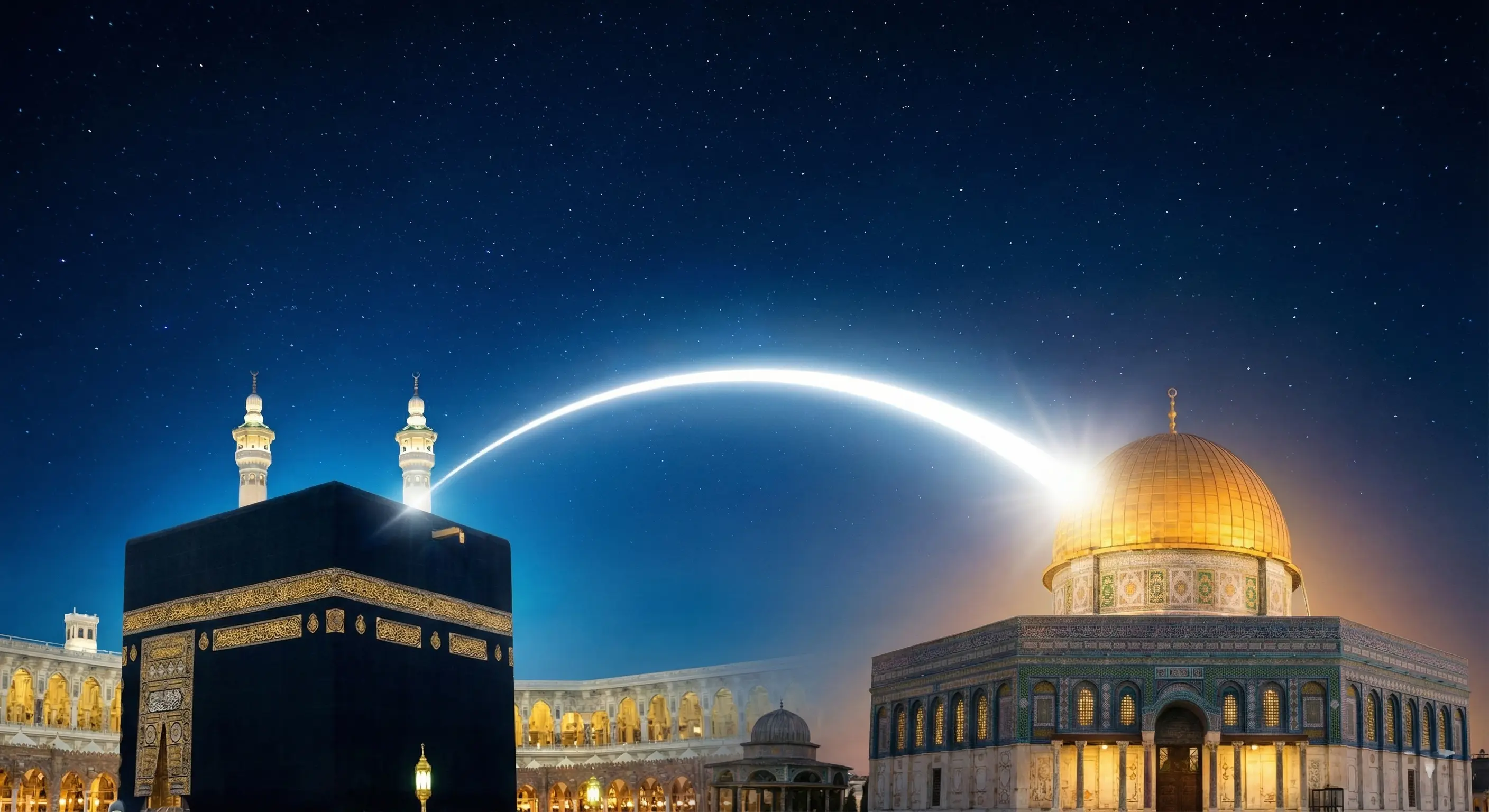
After leading all Prophets in prayer inside Masjid al-Aqsa, the Beloved ﷺ was guided to the most elevated spot of the sacred compound.
The Noble Rock (As-Sakhrah al-Musharrafah)
This is the very rock located beneath today’s Dome of the Rock (Qubbat al-Sakhrah) — the highest point within Al-Aqsa.
According to Ahle Sunnat scholarship:
- This is where the celestial ladder (Al-Mi‘rāj) appeared
- This is where the ascent physically began
- This is where earth released the Greatest of Creation to the heavens
2. Vehicles of Divine Honor: From Buraq to Rafraf
A crucial Aqeedah clarification — the entire journey was not on Buraq.
| Vehicle | Journey Segment |
|---|---|
| Buraq | Makkah → Bayt al-Maqdis (Earthly realm) |
| Celestial Ladder (Al-Mi‘rāj) | Bayt al-Maqdis → First Heaven (Atmospheric ascent) |
| Rafraf | Higher realms (Beyond physical dimensions) |
Imam Ahmad Raza Khan (رحمة الله عليه) emphasized: These were real, physical conveyances, not symbolic visions. This directly refutes claims that Miraj was a dream.
3. Sunni Aqeedah: A Physical and Conscious Ascension
Let us address a critical pain point many believers face today — confusion created by modernist interpretations.
All four Imams agree. Imam Abu Hanifa (رحمة الله عليه) stated denial of physical Miraj is misguidance. Imam Malik (رحمة الله عليه) affirmed it occurred with body and soul.
“The sight did not swerve, nor did it transgress.”
(Surah An-Najm 53:17)
This verse alone destroys the dream-theory argument.
4. The Atmosphere of Angels: Worship Beyond Time
As the ascent began, the Prophet ﷺ witnessed angelic domains:
- Angels perpetually in ruku‘
- Angels forever in sujood
- Angels standing since creation
This is the wisdom behind Salah: Our prayer combines all forms of angelic worship — a divine gift of Miraj.
(We will cover the "Gift of Salah" in detail in an upcoming article.)
5. The First Heavenly Gate: A Protocol of Majesty
When the Prophet ﷺ reached the first heaven, a moment of unmatched dignity unfolded.
The name of this heaven is Raqi'a (رقيعاء) and its guardian angel is Habib (حبيب).
📜 Sahih Bukhari (3207) & Sahih Muslim (162) - Dialogue at the Gate:
- “Who is it?”
- “Jibril.”
- “Who is with you?”
- “Muhammad ﷺ.”
- “Has he been invited?”
- “Yes.”
- Then the gate opened.
Imam Ahmad Raza Khan (رحمة الله عليه) explains: This was not questioning due to ignorance — it was announcement of honor, so all heavens would know: The Awaited One has arrived.
Listen to the Kalaam of Miraj
Imam Ahmad Raza Khan (رحمۃ اللہ علیہ) describes these scenes in his masterpieces.
6. Psychological Impact: Why This Moment Shakes the Heart
Pause here, dear reader. Ask yourself: When the heavens require permission for Muhammad ﷺ, when angels celebrate his arrival, when doors open that never opened before — What does that say about your connection to him ﷺ?
Miraj is not history. It is identity. It defines who leads creation.
Coming Next – Suspense for Part 5
As the first heaven opened, a majestic figure appeared: Looking right — smiling. Looking left — weeping. Surrounded by souls. Who was he? Why joy and sorrow together?
Share the Blessings
References Note: All references in this series are taken from authentic Ahle Sunnat sources, including the four Imams and the scholarly works of Imam Ahmad Raza Khan Barelvi (رحمة الله عليه).