بِسْمِ ٱللَّٰهِ ٱلرَّحْمَٰنِ ٱلرَّحِيمِ
اللَّهُمَّ صَلِّ عَلَى سَيِّدِنَا مُحَمَّدٍ وَعَلَى آلِهِ وَصَحْبِهِ وَسَلِّمْ
Peace and blessings be upon the Seal of Prophets, Sayyidunā Muḥammad ﷺ.
Why This Stage of Miraj Matters to Every Human Being
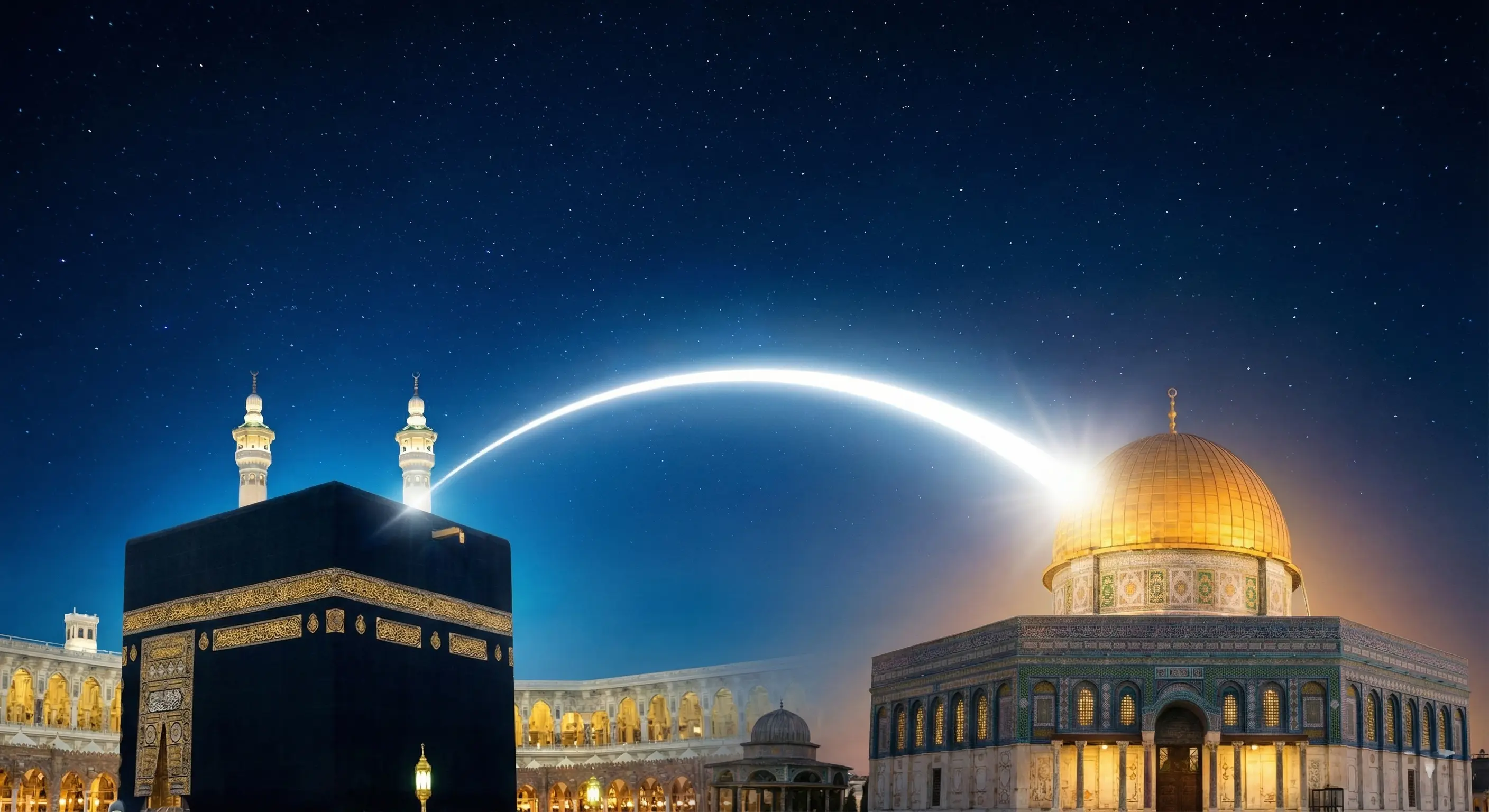
Dear reader, after crossing the boundary between earth and heaven, the journey of Al-Miraj enters a phase that directly concerns you, me, and every human soul.
The first heaven is not merely a celestial location. It is the gateway of human destiny, where the father of mankind watches the fate of his children. This is where lineage meets prophethood, where creation encounters its perfection, and where hope and warning stand side by side.
Entry into the First Heaven (As-Samā’ ad-Dunyā)
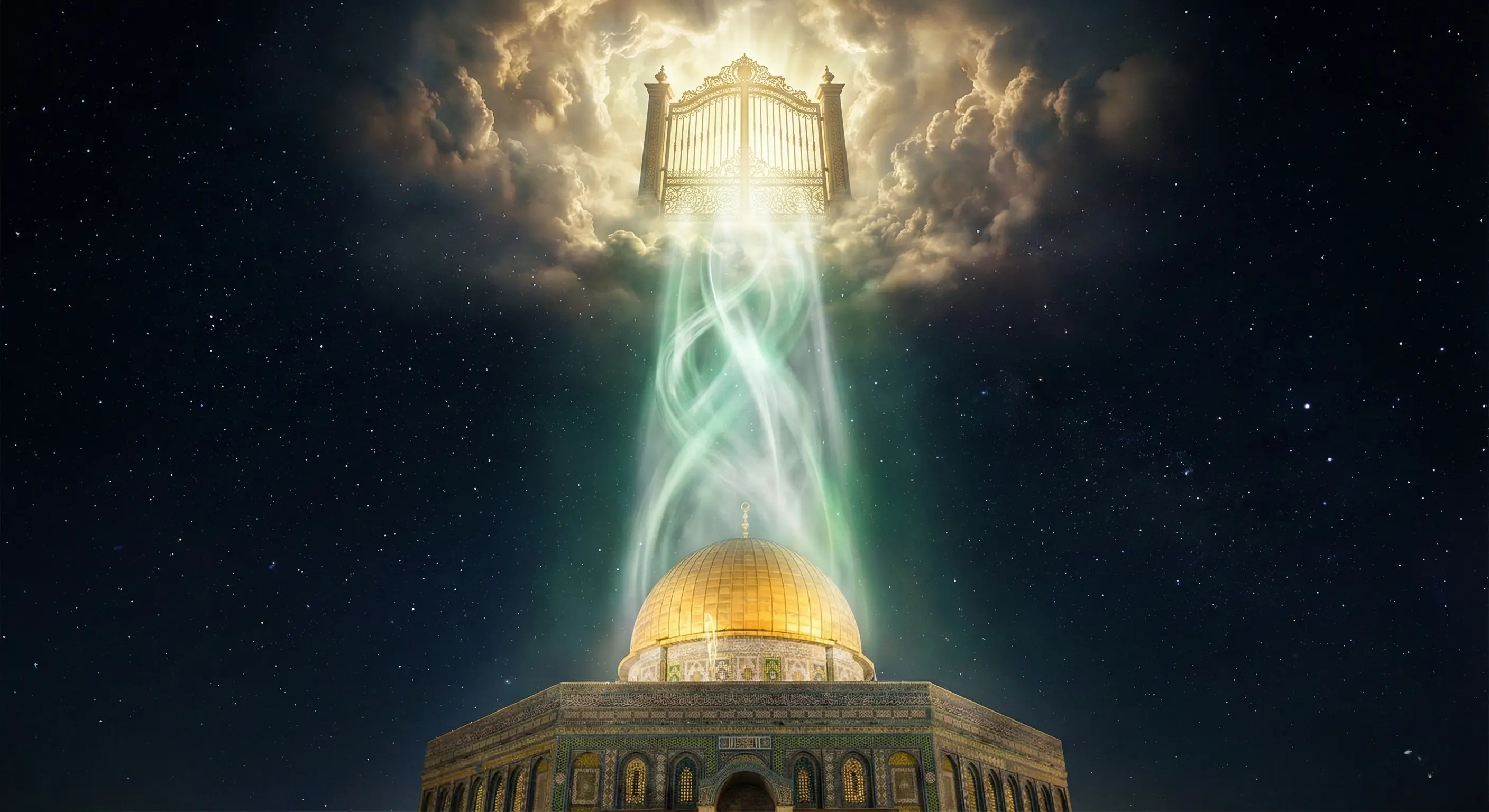
When the gates of the first heaven were opened after the divine protocol (as described in Ṣaḥīḥ al-Bukhārī and Ṣaḥīḥ Muslim), the Messenger of Allah ﷺ entered a realm beyond physical dimensions.
“The first heaven reflects divine mercy for mankind, for it stands closest to human existence.” — Fatawa Razawiyyah
The Guardian of the First Heaven and the Vast Angelic Army
Classical Sunni sources (Ibn Hisham, Ibn Ishaq) mention that the chief angel of the first heaven is Sayyiduna Ismail (عليه السلام).
- Under his command: 70,000 angels
- Under each of those: another 70,000 angels
This staggering number is not for spectacle. It teaches a silent lesson: 👉 Human arrogance collapses when faced with divine order.

The Majestic Meeting: Hazrat Adam (عليه السلام)
Within the first heaven, the Prophet ﷺ encountered a towering, awe-inspiring figure. Jibreel (عليه السلام) respectfully said:
“O Messenger of Allah ﷺ, this is your forefather, Hazrat Adam عليه السلام. Offer him salām.”
The Historic Greeting
According to Ṣaḥīḥ al-Bukhārī (Hadith 349):
“Marḥaban bil-ibn aṣ-ṣāliḥ wan-nabiyy aṣ-ṣāliḥ.”
“Welcome, O righteous son and righteous Prophet.”
Why This Greeting Is Theologically Profound
The Four Imams derive crucial points here:
- Adam (عليه السلام) acknowledged both lineage and prophethood
- The Prophet ﷺ was recognized as Nabi before worldly birth
- His status was known across all realms
Imam Abu Hanifa (رحمۃ اللہ علیہ) stated that denying the bodily Miraj contradicts clear Qur’anic and Hadith evidence — and this meeting itself is proof.
The Height and Presence of Hazrat Adam (عليه السلام)
The Prophet ﷺ saw Hazrat Adam (عليه السلام) in his original creation: Height: 60 cubits (Ṣaḥīḥ Hadith), Radiance: unmatched, Authority: father of all souls.
Imam Ahmad Raza Khan (رحمۃ اللہ علیہ) explains that Allah granted the Prophet ﷺ special vision (Basirat-e-Mustafa) to perceive such magnitude without limitation.
The Scene of the Souls: Joy and Grief
This is the moment that silences hearts. The Prophet ﷺ observed:
- Souls on Adam’s right side → he smiled (People of Paradise)
- Souls on Adam’s left side → he wept (People of Hellfire)
Dear reader, this scene answers a question we all carry silently: “Does my life actually matter?”
Yes. Your actions are already known, your direction already visible.
Meeting with Malik – The Guardian of Hellfire
Still within the first heaven, the Prophet ﷺ saw a stern angel whose face had never smiled. Jibreel said: “This is Malik, the guardian of Hell.” (Ṣaḥīḥ Muslim)
Despite his severity, Malik stood in absolute reverence before the Prophet ﷺ. This moment establishes: The authority of the Prophet ﷺ over all realms, and the reality that Hell itself recognizes him.
The Four Rivers: Nile and Euphrates
The Prophet ﷺ witnessed four rivers: Two hidden (from Paradise) and two apparent (Nile and Euphrates).
According to Imam Ahmad Raza Khan (رحمۃ اللہ علیہ), this signifies: Material sustenance, spiritual knowledge, and the global spread of Islamic mercy. These rivers were a prophecy of Islam nourishing civilizations.
Bayt-ul-‘Izzah: The First Station of the Qur’an
Within the first heaven lies Bayt-ul-‘Izzah: The place where the Qur’an descended in entirety on Laylat-ul-Qadr, later revealed gradually over 23 years. The Prophet ﷺ witnessed this sacred station — confirming the cosmic importance of Revelation.
Tasbeeh of the Angels of the First Heaven
A unique glorification echoed:
سُبْحَانَ ذِي الْمُلْكِ وَالْمَلَكُوتِ
“Subḥāna dhil-Mulki wal-Malakūt…”
The Four Imams emphasize that narrating angelic tasbeeh brings barakah, even to listeners centuries later.
Listen to the Kalaam of Miraj
Imam Ahmad Raza Khan (رحمۃ اللہ علیہ) describes these scenes in his masterpieces.
Why This Stage Was Necessary
Imam Ahmad Raza Khan (رحمۃ اللہ علیہ) beautifully explains: “Before meeting his Lord, the Beloved ﷺ was shown the full reality of creation — its beginning, its end, and its accountability.”
This stage teaches us: Lineage does not save without faith. Faith does not survive without obedience. Mercy remains open until the final breath.
Share the Blessings
References Note: All references in this article are derived from authentic Ahl-e-Sunnah sources, including the Qur’an, Ṣaḥīḥ Hadith, the teachings of the Four Imams, and the scholarly works of Imam Ahmad Raza Khan Barelvi (رحمۃ اللہ علیہ).